
Strategic AnalysisPeace & Security
Ethiopia's Federal Government Just Appointed Five Men to Run Tigray by Decree. The Peace Deal That Ended the Last War Said Tigrayans Were Supposed to Help Choose Them.
18 October 2026
Strategic Analysis · Somalia & Horn of Africa
FIKIR Institute provides independent research, strategic analysis and policy insight on Somalia and the wider Horn of Africa, grounded in rigorous evidence and regional expertise.

The International Crisis Group's 12 October alert, "Pulling Ethiopia and Eritrea Back from War," says the two governments are perilously close to direct interstate conflict for the first time since their 1998-2000 border war, and that any outbreak would likely spread into the Red Sea and draw in Sudan, Egypt, Saudi Arabia and the UAE, according to Crisis Group's published analysis, the Globe and Mail and Al Jazeera. Ethiopian federal forces and the allied Tigray Peace Force have, per the conflict monitor ACLED, now taken every major city in Tigray, including the historic city of Aksum, and advanced within roughly 80 kilometres of Eritrea's Red Sea port of Assab, while Globe and Mail reporting citing Ethiopia scholar Kjetil Tronvoll puts several hundred thousand Ethiopian and Eritrean troops now massed along their shared border. Both governments expelled each other's diplomats and severed relations on 1-2 October; U.S. Secretary of State Marco Rubio called Prime Minister Abiy Ahmed on 14 October urging restraint and warning against cross-border incursions, and Canada separately said it was "deeply concerned" about regional escalation, according to the Globe and Mail. The Tigray Peace Force says Eritrean forces have taken "heavy losses" in fighting near the border; Eritrea's information minister, Yemane Gebremeskel, calls the claim false, and ACLED says Eritrean troops that crossed into Ethiopia near Zalambessa have since pulled back toward their own territory, with neither claim independently verified.
19 October 2026 · 9 min read
18 October 2026

17 October 2026

16 October 2026
15 October 2026
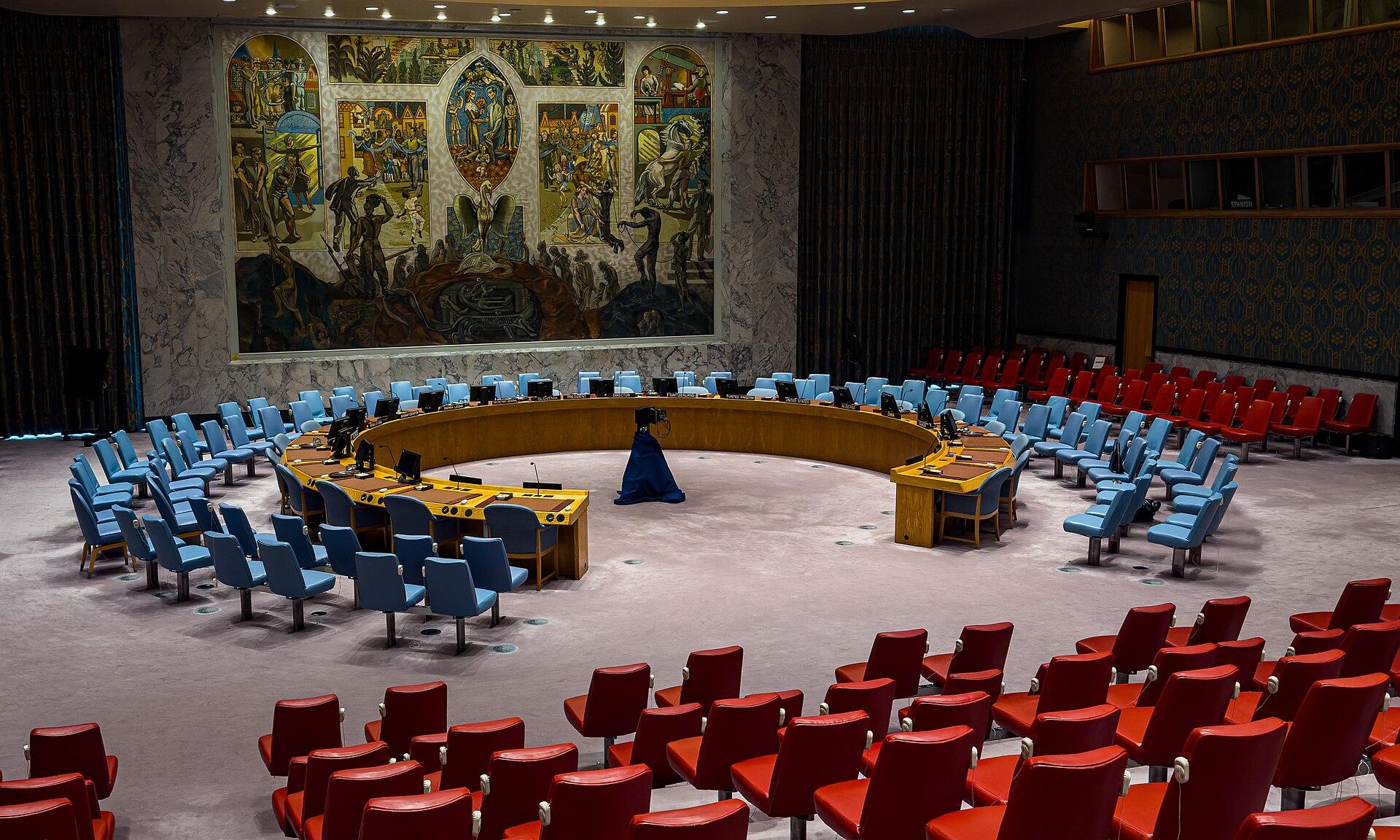
The African Union and the United States have anchored every public statement on Ethiopia's renewed Tigray war to the 2 November 2022 Pretoria Agreement, which the AU calls "the cornerstone of sustainable peace, stability and reconciliation in Ethiopia." Since fighting resumed on 23 September 2026, that framework's central territorial assumption, that Tigray's capital, Mekelle, remains under TPLF administrative control as the agreement's implementation presumed, has stopped holding: federal-aligned forces retook the city on 3 October without a reported battle, while the TPLF itself describes its withdrawal as temporary rather than final. Neither the AU nor the United States has issued any statement addressing Mekelle's recapture specifically in the days since, even as both continue to invoke Pretoria's language in general terms. This brief argues that a framework neither reaffirmed nor revised against the facts that have overtaken it is not neutral; it is a mediation posture quietly losing its relevance to the war it claims to be managing, at the exact moment Ethiopia's relations with Eritrea, Sudan, Egypt and Somalia have deteriorated enough to remove any single regional mediator capable of replacing it.
7 October 2026 · 9 min read

Around 15 September 2026, American officials met Houthi representatives at the US embassy in Muscat and secured a pledge that the group would not attack US or Israeli shipping, while explicitly continuing its blockade against vessels linked to Saudi Arabia, the same country that twice asked President Trump for direct strikes and was twice refused. Somalia and Djibouti joined the fourteen-nation, Saudi-led Multinational Maritime Defense Alliance in July specifically to help secure Bab el-Mandeb; a separate US-Houthi understanding that protects some coalition members' shipping while leaving the coalition's own founder exposed raises a direct question about what the coalition, and Somalia's seat in it, is actually for. This brief assesses what the Muscat arrangement means for the MMDA's cohesion and recommends how Somalia should respond.
26 September 2026 · 8 min read
The Ethiopian National Defence Force said on 24 September 2026 that it had killed 272 Tigrayan fighters and wounded 260 more in a single day of fighting, publishing no supporting evidence. Less than 24 hours later, phone and internet networks across Tigray went dark, a shutdown each side blames on the other, closing the one channel that could have let anyone outside the region independently check the claim, or any claim either side makes from this point forward. This is a documented pattern from the 2020-2022 war, when a communications blackout combined with a supply blockade to produce famine-like conditions international monitors could not observe in real time. This brief recommends what independent verification mechanism should exist now, before the pattern repeats at scale.
26 September 2026 · 7 min read
The United States confirmed on 18 September 2026 that it will let the UN Support Office in Somalia (UNSOS) fund AUSSOM's logistics through a 12-month drawdown beginning January 2027, before shutting the office down entirely, a softer landing than the outright cutoff Washington threatened in July but a full year short of the 18-to-24-month transition Somalia and the African Union had requested. FIKIR Institute's earlier brief on AUSSOM's funding cliff recommended anchoring any drawdown to published, independently verified readiness benchmarks rather than a calendar alone; Washington has now set the calendar without publishing any such benchmarks. Ethiopia has already quietly handed its Burhakaba base to Somali forces and Uganda has announced a full 2027 withdrawal, meaning the drawdown clock is already running on the ground regardless of what benchmarks eventually accompany it. This brief sets out what those benchmarks should be and who should be accountable for them.
26 September 2026 · 8 min read

Israel's December 2025 recognition of Somaliland broke a legal norm the international community had held for thirty years. Nine months later, that break has produced a chain of basing offers between Hargeisa, Mogadishu and Washington that sits on increasingly thin legal ground. This report maps the sequence, examines what international law actually says about it, and asks what it means that recognition of a breakaway territory is now being negotiated as a function of military access rather than settled legal or political principle.
26 August 2026 · 8 min read

Somalia passed a Cybersecurity Law, named a lead authority and released a national risk framework within six months. This report assesses what remains before that architecture functions as a strategy, with a focus on the public-private partnership gap.
18 August 2026 · 11 min read

An assessment of digital public infrastructure, mobile finance and data governance across Somalia's evolving digital economy.
15 July 2026 · 14 min read

A comparative analysis of port competition, corridor development and regulatory harmonisation across the Horn of Africa.
22 June 2026 · 18 min read

Political transition, federal reform and reconstruction shape Somalia's evolving institutional landscape.
Federal governance, economic reform and regional diplomacy define Ethiopia's role in the Horn.

A strategic maritime gateway anchoring regional trade and security cooperation on the Red Sea.
Regional economic hub and diplomatic actor shaping East African integration and security policy.
Government effectiveness, institutional development, public financial management, accountability and state-building.
Economic policy, trade, investment, infrastructure and private-sector development.
Conflict, security institutions, counter-terrorism, peacebuilding and regional stability.
Artificial intelligence, digital government, cybersecurity, data governance and emerging technologies.
Climate resilience, water, agriculture, energy and environmental challenges.
Education, employment, demographics, health and social development.
Tracking the political, economic and strategic forces shaping the Horn of Africa.
Federal-State Coordination Index
Moderate
Latest available assessment
Somalia Inflation
5.4%
Latest available indicator
Reported Security Incidents
-12% QoQ
Latest available indicator
Berbera Corridor Throughput
+8% YoY
Latest available indicator
Rainfall Deviation
-15% below average
Latest available indicator
Mobile Money Penetration
73%
Latest available indicator

18 September 2026 · Mogadishu, Somalia
A closed-door dialogue convening senior policymakers and researchers to discuss regional trade and security cooperation.

5 September 2026 · Nairobi, Kenya
A roundtable examining digital identity, payments and data governance frameworks across East Africa and the Horn.
Receive our latest research, policy analysis and insights from Somalia and the Horn of Africa.