Home · Insights · Ethiopia
RSF-Allied Fighters Said They'd Reached the Border Zone Beside the Dam That Generates Nearly Half of Sudan's Power. Hours Earlier, Their Drones Had Already Hit the Governor's House in the City Built to Guard It.
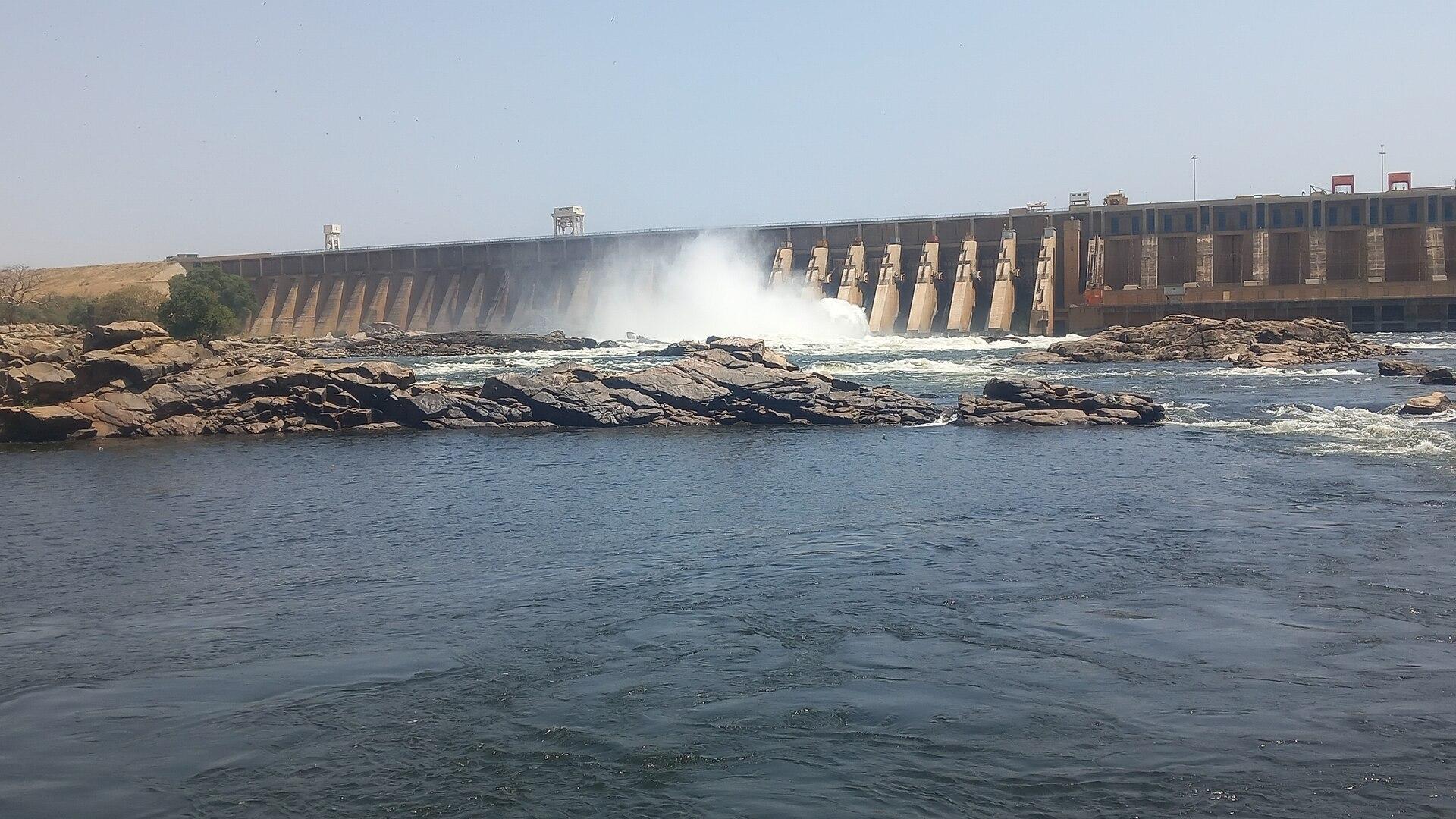
Sudan's army said on 3 October it had repelled an RSF and SPLM-N attack on the localities of Minza and Basharkat in Blue Nile state's Roseires locality, a strategic post east of the Roseires Dam, the 280-megawatt hydropower plant that supplies close to half of Sudan's electricity and irrigates the Gezira and Managil schemes that feed much of the country. The RSF-aligned Tasees Alliance and SPLM-N said the opposite: that they had taken Al-Kadalou, a border zone "along the Roseires Dam," and eight other positions in the same locality, capturing twenty vehicles. Both claims followed RSF suicide drones striking the Blue Nile governor's residence in the state capital, Ed Damazin, hours earlier the same day.
FIKIR Institute · 7 October 2026 · 10 min read
Audio reading is ready.
Abstract: Sudan's army said on 3 October it repelled an attack by the Rapid Support Forces and allied Sudan People's Liberation Movement-North fighters near the Roseires Dam, a 280-megawatt hydropower plant in Blue Nile state that supplies nearly half of Sudan's electricity and irrigates the Gezira and Managil schemes central to the country's food supply. The RSF-aligned Tasees Alliance and SPLM-N, loyal to deputy chairman Joseph Touka, claimed the opposite: full control of Roseires locality, including a border zone its own fighters said runs "along the Roseires Dam" itself. Both claims followed RSF suicide drones striking the Blue Nile governor's residence in the state capital, Ed Damazin, hours earlier the same day. The clash is the closest the war has come to Sudan's second-largest hydropower asset since the RSF-SPLM-N alliance recaptured the border towns of Kurmuk and Geissan earlier this year, and it lands one day after Sudan's head of state, Abdel Fattah al-Burhan, secured a written declaration of support for Sudan's "unity, sovereignty, territorial integrity and national institutions" from Egypt, Eritrea and Somalia, the same declaration FIKIR Institute covered as it answered Ethiopia's regional ambitions on the Nile and the Red Sea.
Two accounts of the same Saturday
Sudan's military said its Fourth Infantry Division dealt what it called a decisive blow to the RSF and to fighters loyal to Joseph Touka's SPLM-N faction on 3 October, in an assault that targeted Minza, a strategic government post in the Wad al-Mahi district east of the Roseires Dam, and the nearby locality of Basharkat. The division said it killed and wounded fighters, destroyed vehicles and equipment, and forced the attacking force to retreat under heavy artillery and gunfire, according to Sudan Tribune and Ahram Online. The RSF-aligned Tasees Alliance, Sudan's formal paramilitary-political coalition that includes the RSF, SPLM-N and the SLM-TC, announced the opposite outcome the same day: that it had taken full control of Roseires locality, listing nine captured areas, Menze, Jabal El Nimr, Jabal El Num, Basharkat, Matanguya, Mangaling El Jawani, Masnabiga and Makala, alongside Al-Kadalou, a border zone SPLM-N said sits directly "along the Roseires Dam." SPLM-N's own statement claimed its fighters seized eight positions in Al-Kadalou specifically, capturing twenty combat vehicles and an unspecified number of Sudanese army personnel. Radio Tamazuj and Sudan Tribune, the two outlets with the closest sourcing on Blue Nile's war, reported both claims without adjudicating between them, noting only that neither the RSF-SPLM-N alliance nor the Sudanese army produced independently verifiable footage of the contested ground.
Drones over the governor's house, hours earlier
Before the ground fighting was reported, RSF suicide drones struck the Ed Damazin residence of Blue Nile state governor Ahmed al-Omda Badi, according to Darfur24, Radio Tamazuj and Al Arabiya English, which cited Sudanese sources describing air defences intercepting the drones over the state capital. Al-Omda Badi was in Khartoum on official business at the time and was not present when his home was targeted; no casualties were reported, and the governor did not detail any damage. His public response was defiant rather than alarmed: the strikes, he said, "will not deter us from continuing our struggle and defending the homeland." The sequence, drones over the seat of Blue Nile's civilian government followed within hours by a contested ground battle over the dam that powers much of the state and the country beyond it, reads as a single coordinated push rather than two unrelated incidents, even though neither Sudanese nor RSF sources have explicitly linked the two.
Why the Roseires Dam is not an ordinary battlefield
The Roseires Dam, completed in 1966 and heightened in 2013 to more than double its storage capacity, operates a 280-megawatt hydropower plant that the International Hydropower Association and water-infrastructure researchers describe as supplying close to half of Sudan's total electricity generation, while its reservoir irrigates the Gezira, Managil, Rahad and Suki schemes, the backbone of Sudan's agricultural output and a food-security asset for a country already enduring famine conditions in parts of Darfur and Kordofan. A dam of that consequence coming within an active front line, even if the Sudanese army's "repelled" account holds, is a materially different kind of threat than the town-by-town fighting that has characterised Blue Nile's war since the RSF-SPLM-N alliance recaptured Kurmuk in March and Geissan in August: those were population centres and military positions, not the single piece of infrastructure most of Blue Nile and much of Sudan depends on for power and food. SPLM-N's own description of Al-Kadalou as running "along the Roseires Dam" is, whether or not it reflects a durable territorial gain, the first time either side in this specific campaign has framed its own advance in terms of the dam's location rather than a town's.
A city its own commanders called exposed
Saturday's fighting did not arrive without warning. Joseph Touka, SPLM-N's first deputy chairman and the commander Sudan's army named directly in its own statement, said in comments reported by Radio Tamazuj and Sudan Tribune after the Kurmuk and Geissan recaptures that Ed Damazin itself was now "exposed and within striking distance" of his fighters, a claim that reads, after 3 October's drone strikes on the governor's own residence, as a warning that was substantially realised. Sudan's army responded to the earlier gains by deploying reinforcements to Blue Nile, and Ed Damazin had already come under direct RSF drone assault on 4 September, weeks before this latest escalation, according to prior Sudan Tribune and Radio Tamazuj reporting FIKIR Institute has tracked. The pattern across these months, provincial towns falling to the RSF-SPLM-N alliance, the state capital's exposure named publicly by the alliance's own commander, then drone strikes on the capital's senior officials, followed now by claimed fighting at the dam itself, describes an escalating siege logic rather than a single surprise attack.
The accusation FIKIR Institute has already tracked
Blue Nile's fighting does not sit in isolation from the wider regional dispute this outlet has covered since late September. Sudan's own military has separately and repeatedly accused Ethiopia of allowing its territory to be used to train and arm the RSF and to launch drone strikes into Sudan, a claim Blue Nile's provincial governor, Abdelatty al-Faki of neighbouring Kurmuk, made explicitly when he said "the forces that attacked Kurmuk set out from inside Ethiopian territory and are supported by Ethiopia," an allegation Addis Ababa denies. That accusation runs in the opposite direction from the one Ethiopia's own army chief, Field Marshal Berhanu Jula, levelled on 27 September, that Eritrea, Sudan and Egypt were arming the Tigray-led alliance fighting his government, which Sudan's military called baseless at the time. Blue Nile's dam-adjacent fighting on 3 October does not resolve which government's account of cross-border militia support is accurate, but it confirms that the Sudan-Ethiopia frontier, not only the Eritrea-Ethiopia and Egypt-Ethiopia fronts FIKIR Institute has covered this week, remains an active military theatre in its own right, with infrastructure of national consequence now inside its range.
A declaration of solidarity signed the day before
The Roseires clash lands one day after Sudan's head of state, Abdel Fattah al-Burhan, sat alongside Egypt's Abdel Fattah al-Sisi, Eritrea's Isaias Afwerki and Somalia's Hassan Sheikh Mohamud to sign the El Alamein Declaration, which FIKIR Institute covered in detail, a text in which all four governments affirmed support for Sudan's "unity, sovereignty, territorial integrity and national institutions," rejected the establishment of "parallel entities," and called for a Sudanese-led political process. That written guarantee, secured by al-Burhan's own government on 4 October, was answered within a day by an RSF-aligned alliance claiming it had reached the dam that symbolises exactly the sovereignty and institutional integrity the declaration was written to protect. Whether the declaration's language translates into material support from its three co-signatories, beyond words, for Sudan's army at a moment its own account describes as a "decisive blow" delivered and the RSF-SPLM-N account describes as a decisive gain achieved, is a question the declaration itself does not answer.
Momentum claims beyond Blue Nile, and a toll the claims do not capture
Sudan's army has paired its Blue Nile account with gains it says it is making elsewhere: Al Jazeera reported on 4 October that government forces had captured the town of al-Mazroub, a link between army-held North Kordofan and RSF-held West Kordofan, days after also taking an RSF stronghold in North Kordofan, in reporting that asked directly whether the army is gaining overall momentum against the RSF after three and a half years of war. That momentum narrative sits uneasily against two other developments from the same week: the World Food Programme said an air strike killed a UN aid-truck driver inside Sudan on 4 October, and the UN Human Rights Council condemned attacks on civilians in Sudan and called for a truce on 6 October, according to Al Jazeera's reporting on both. Neither territorial claim, Khartoum's "decisive blow" or the RSF-SPLM-N alliance's "full control," has been independently verified, and both arrive inside a war whose civilian toll continues to accumulate regardless of which army's account of the Roseires fighting proves accurate.
What to watch
Three signals will show whether Saturday's fighting at Roseires marks a genuine escalation toward Sudan's hydropower infrastructure or a contested claim that recedes once the dust settles. First, whether either side produces verifiable evidence, satellite imagery, captured equipment on camera, or independent journalist access, that resolves which account of Al-Kadalou and Minza is accurate, given that Radio Tamazuj and Sudan Tribune's own reporting treated both claims as unconfirmed. Second, whether the RSF-SPLM-N alliance follows its claimed advance with any statement or action concerning the Roseires Dam's operation itself, which would convert a territorial claim into an infrastructure threat with direct consequences for Sudanese civilians' electricity and irrigation. Third, whether Egypt, Eritrea or Somalia, having just signed a declaration backing Sudan's institutional sovereignty, issue any statement specific to the Blue Nile fighting, or whether their declaration's language remains, for now, confined to the diplomatic register in which it was written.
Policy implications
For Sudan's government, a contested battle this close to a dam supplying nearly half the country's electricity raises the stakes of the Blue Nile front well beyond the town-by-town fighting that has defined it so far; a verified RSF-SPLM-N foothold anywhere near Roseires's operational infrastructure would hand the alliance leverage over Sudanese civilians' basic services that no previous gain in this campaign has offered. For Egypt, Eritrea and Somalia, the El Alamein Declaration's written commitment to Sudan's sovereignty and institutions was tested within a day by events on the ground; whether that commitment produces anything beyond the diplomatic coordination mechanism the four governments agreed to is a question this specific, infrastructure-adjacent escalation makes considerably more urgent than the declaration's general language anticipated. For Ethiopia, a Sudanese governor's standing accusation that attacks on Blue Nile originate from Ethiopian territory, now paired with fighting that has reached a nationally significant dam, adds a concrete and measurable stake, Sudanese electricity and irrigation, to a cross-border dispute that has so far been argued mostly in terms of troop movements and diplomatic statements. For international monitors and aid agencies, the World Food Programme's own driver killed in a separate Sudanese air strike the same week is a reminder that attention paid to a strategically significant dam should not come at the expense of continued, systematic documentation of the war's civilian toll elsewhere in the country.
Related Analysis
- A Think Tank Warned Ethiopia and Eritrea Are 'Perilously Close' to All-Out War. Its Own Analysis Says That War Would Pull In Sudan, Egypt, Saudi Arabia and the UAE.
- Ethiopia's Federal Government Just Appointed Five Men to Run Tigray by Decree. The Peace Deal That Ended the Last War Said Tigrayans Were Supposed to Help Choose Them.
- Somalia's Defence Minister Says His Forces Removed 260 Armed Men From Opposition Leaders' Homes. The Armoured Vehicles Ringing Those Homes Were Still There Three Days Later.
- The UN Security Council Has Met on Ethiopia and Eritrea Twice in Two Weeks. Three Days After Eritrea Invoked Chapter VII, It Still Hasn't Said a Public Word.