Home · Insights · Ethiopia
Gunmen Looted a UN Warehouse in Tigray Hours After Aid Officials Said Half the Region Needed Emergency Food. The One Road That Could Still Save Them Runs Past the Fighting.
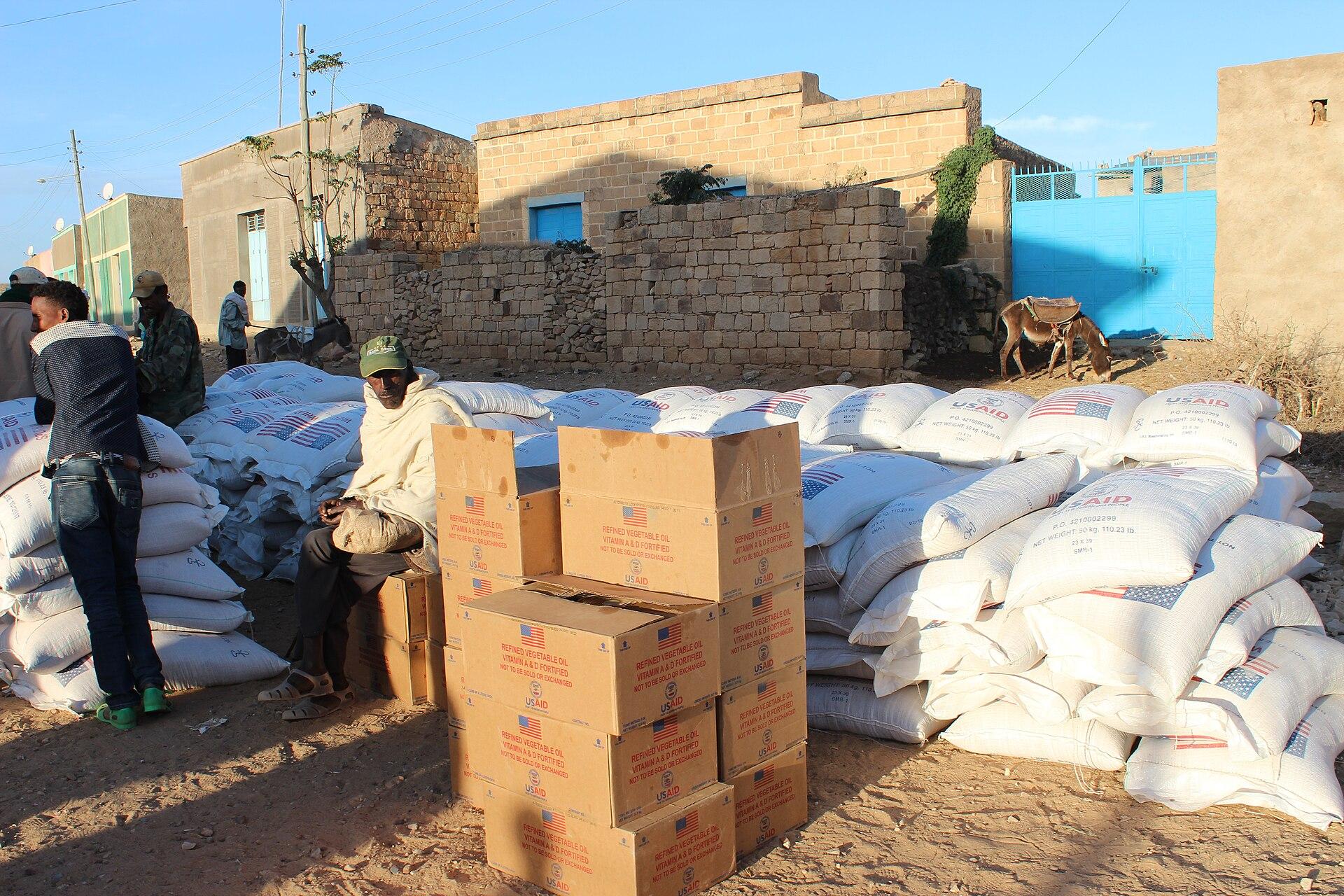
OCHA said on 5 October that a UN agency warehouse and several NGO facilities in Tigray were looted overnight, with food, seed, fertiliser and water pumps lost, days after The New Humanitarian reported that a failed September harvest had left 3.9 million people, more than half the region's population, needing immediate emergency food assistance. Both the looting and the hunger crisis sit on the same 460-kilometre corridor linking Mekelle to the Afar town of Semera, the only route still carrying aid into Tigray and the same stretch of road Tigrayan-allied and Ethiopian federal forces fought over for the first week of October.
FIKIR Institute · 9 October 2026 · 9 min read
Audio reading is ready.
Abstract: Ethiopia's renewed Tigray war has produced a second crisis running alongside the battlefield one, and it is arriving in the same places and along the same roads. The New Humanitarian reported on 8 October, citing a September overview from Tigray's Disaster Risk Management Commission (DRMC), that a failed harvest had left 3.9 million people, more than half the region's population, needing immediate emergency food assistance, with donor cuts narrowing distribution to displaced people only and leaving an estimated 3.2 million others in need without any food assistance at all. Days later, on 5 October, OCHA reported that a UN agency warehouse and a number of NGO facilities and warehouses in Tigray had been looted overnight, losing food, seed, fertiliser and water pumps; a UN spokesperson condemned the looting without attributing it to either combatant. The International Organization for Migration has recorded more than 180,000 people newly displaced since fighting resumed on 23 September, and OCHA said on 8 October that Tigray's health services were at risk of further disruption, after reports that the Tigray Military Referral Hospital had itself been damaged and looted. Underpinning all of it is a single logistical fact: the 460-kilometre road linking Mekelle to Semera, in neighbouring Afar, is the one corridor still carrying aid into Tigray, and it was, for the first week of October, also a battlefield, as Tigrayan-allied and Afar rebel forces seized towns along a feeder road toward it before Ethiopian federal forces reported retaking them on 1 October.
A harvest that failed while the war returned
The hunger figures predate the fighting but were overtaken by it. The New Humanitarian reported that Tigray's Tsidia spring rains, which normally arrive across the region's eastern and southern zones between September and November, came more than five weeks late this year and were interrupted by dry spells lasting over a month in parts of the region, a failure that followed years of depleted coping capacity from the 2020-2022 war and a prior drought. The DRMC's own September humanitarian overview, which the outlet said it had reviewed, put the number of people needing immediate emergency food assistance at 3.9 million, more than half of Tigray's population, a figure arrived at before the latest round of fighting displaced anyone further. The same overview found that many households had experienced complete crop failure. None of this is a claim either combatant disputes; unlike the battlefield reporting from Adigrat, Zelambesa or Alamata that FIKIR Institute has covered in recent weeks, where Ethiopia and Eritrea or the TPLF and federal government give irreconcilable accounts of the same events, the hunger numbers are a joint product of drought and an already-strained aid system, not a contested narrative with two sides.
A funding gap that decides who eats
What has changed the hunger crisis's shape, more than the drought itself, is money. The New Humanitarian reported that sweeping reductions in international food aid funding have forced agencies operating in Tigray to narrow distribution criteria so that only internally displaced people currently qualify for assistance, a rationing decision that leaves an estimated 3.2 million people in need, people who are hungry but not displaced, without any food assistance at all. That distinction matters for how the crisis will be read from outside the region: a caseload defined by displacement status rather than by need will track the war's front lines rather than the drought's actual footprint, understating hunger in areas that have not yet seen fighting and potentially overstating the aid system's reach in areas that have. Persistent federal cash and fuel constraints, and acute shortages of agricultural inputs for the next planting cycle, compound a funding shortfall that the DRMC's own 2026 preparedness planning, published earlier in the year, had already flagged as inadequate to the region's needs even before the September harvest failure or the renewed fighting were in the picture.
A warehouse looted the same week the health system was flagged at risk
The newest disruption to the aid system did not come from drought or from funding at all. OCHA reported on 5 October that a UN agency warehouse, together with facilities and warehouses belonging to local and international NGOs in Tigray, had been looted the previous night, with humanitarian supplies including food, seed, fertiliser and water pumps lost. A UN spokesperson said humanitarian personnel, premises and assets must never be targeted, a statement that condemned the act without identifying who carried it out, consistent with a pattern FIKIR Institute has observed throughout this war in which international statements name consequences more readily than perpetrators. Reporting reviewed separately describes looting in Mekelle in the period after TPLF forces withdrew from the city on 5 October, in which armed individuals targeted government institutions, NGOs and private property, though it has not been established whether that looting and the UN warehouse incident OCHA reported are the same event or two separate ones. Three days later, on 8 October, OCHA warned that Tigray's health services were at risk of further disruption as renewed fighting displaces more civilians and restricts humanitarian access, a warning that followed reports the same week that the Tigray Military Referral Hospital, a facility central to the region's already-depleted health system, had itself been damaged and looted. The International Organization for Migration has recorded more than 180,000 people newly displaced since the fighting resumed on 23 September, a figure that, combined with the warehouse losses, point toward a caseload growing faster than the aid system feeding it.
The 460-kilometre road that is also a front line
Every figure above depends on one road remaining open. The corridor linking Mekelle to Semera, in neighbouring Afar, spans roughly 460 kilometres and was the primary supply route for the humanitarian response during the 2020-2022 war; ACAPS, the humanitarian analysis hub, assessed it as functional as of 4 October, and OCHA noted that telecommunications and electronic banking services had resumed across most of Tigray after more than a week of disruption, a prior blackout FIKIR Institute has already reported. But the corridor's security has not been settled. Forces aligned with the Tigray Defence Forces and the Afar Revolutionary Democratic Unity Front, known as Ugugumo, captured the towns of Abala on 22 September and Erebti on 27 September, according to the conflict monitor Critical Threats, both on a secondary road feeding into the A1 highway, Ethiopia's main trade route to the port of Djibouti, near Semera. ACLED's East Africa analyst, Jalale Getachew Birru, said at the time that "the TPLF's advance in collaboration with Ugugumo into Afar could change that calculation if it threatens the Semera-Djibouti route," adding that "control of this route could give the TPLF significant leverage over the federal government by threatening Ethiopia's main trade corridor to the port of Djibouti." Ethiopian federal forces and the pro-government Tigray Peace Force launched counterattacks along the highway on 1 October and reported retaking both Abala and Erebti, according to Critical Threats, though the monitor said it could not independently verify subsequent claims from either side about further movement on the route. The practical result is that the same road ACAPS described as functional for aid on 4 October was, for the preceding nine days, contested ground between the forces whose fighting is also displacing the people that road is meant to feed.
A rights chief's warning, and the strikes that preceded it
The UN's human rights office had already flagged the civilian cost of the fighting before the hunger figures or the looting made the picture any starker. UN High Commissioner for Human Rights Volker Türk urged Ethiopia's government, the TPLF and their respective allies to de-escalate immediately in September, warning of a return to full-scale war, after his office documented Ethiopian National Defence Force airstrikes, some reportedly carried out by drones, that struck five schools in Tigray on 22 September, causing deaths and injuries, and a mortar strike his office attributed to the ENDF in Kobo, in neighbouring Amhara region, on 23 September, which also killed civilians. Neither incident has been resolved by any subsequent official accounting from Addis Ababa, and both predate the harvest-failure and looting reporting by roughly two weeks, meaning the specific civilian-harm pattern Türk's office documented in September has continued, by OCHA's own more recent reporting, into October rather than abating.
What to watch
Three indicators will show whether this is a hunger crisis stabilising under strain or one still accelerating. First, whether the Mekelle-Semera corridor remains open and secure in the weeks ahead, since ACAPS' 4 October functional assessment was a snapshot of a route that changed hands along a feeder road only days earlier, and any renewed fighting on it would cut the one channel currently reaching 3.9 million people in need. Second, whether international donors respond to the DRMC's September figures with new funding, since the 3.2 million people currently excluded from food distribution are excluded specifically because of a funding shortfall that predates this month's fighting and that the fighting has only made harder to close. Third, whether any party is identified as responsible for the 4 October warehouse looting, since OCHA's statement so far has condemned the act without attribution, and a pattern of unattributed attacks on aid infrastructure, if it continues, will make it progressively harder for agencies to plan deliveries along a corridor that already runs through contested territory.
Policy implications
For international donors, a hunger crisis affecting more than half of Tigray's population that predates the current fighting, compounded by a warehouse looting and a health system OCHA says is now at risk, tests whether funding decisions will continue to track displacement status, which follows the war's front lines, rather than need, which follows the drought's actual footprint and currently leaves 3.2 million people outside the aid system altogether. For Ethiopia's federal government and the TPLF-led alliance alike, a shared humanitarian catastrophe that neither side disputes, unlike the battlefield narratives each contests, offers a rare point of possible agreement, a humanitarian pause specifically for the Mekelle-Semera corridor, that neither side has yet proposed despite each publicly citing civilian welfare as justification for its own military conduct. For the African Union and IGAD, whose prior statements this war have called for unhindered humanitarian access without naming either the Abala-Erebti fighting or the warehouse looting specifically, the gap between general calls for access and the specific, locatable threats to the one corridor that provides it suggests existing diplomatic statements have not yet caught up to the ground-level mechanics of the crisis they are meant to address. For the wider Horn of Africa, a famine risk building inside an active interstate and civil conflict, one this outlet has tracked spreading from Tigray into Afar, Amhara and now the Ethiopia-Eritrea relationship itself, raises the stakes of every ceasefire proposal still on the table: a negotiated pause that does not specifically secure the Mekelle-Semera road will leave 3.9 million people's food security hostage to a front line that has already moved twice in two weeks.
Related Analysis
- Ethiopia's Federal Government Just Appointed Five Men to Run Tigray by Decree. The Peace Deal That Ended the Last War Said Tigrayans Were Supposed to Help Choose Them.
- Kenya's First Ebola Patient Passed Airport Health Screening and Was Dead Within Three Days. Two of His Relatives Have Since Tested Positive From Inside Quarantine.
- A Boat Carrying 305 People Fleeing Ethiopia's War Sank Off Djibouti. The UN Says at Least 139 Died — Trying to Reach a Second War in Yemen.
- Ethiopia Told the UN Security Council That Eritrean Tanks Had Pushed 60 Kilometers Into Its Territory. The Phrase It Used Next Was 'All-Out Invasion.'