Home · Insights · Horn of Africa
The UN Security Council Has Met on Ethiopia and Eritrea Twice in Two Weeks. Three Days After Eritrea Invoked Chapter VII, It Still Hasn't Said a Public Word.
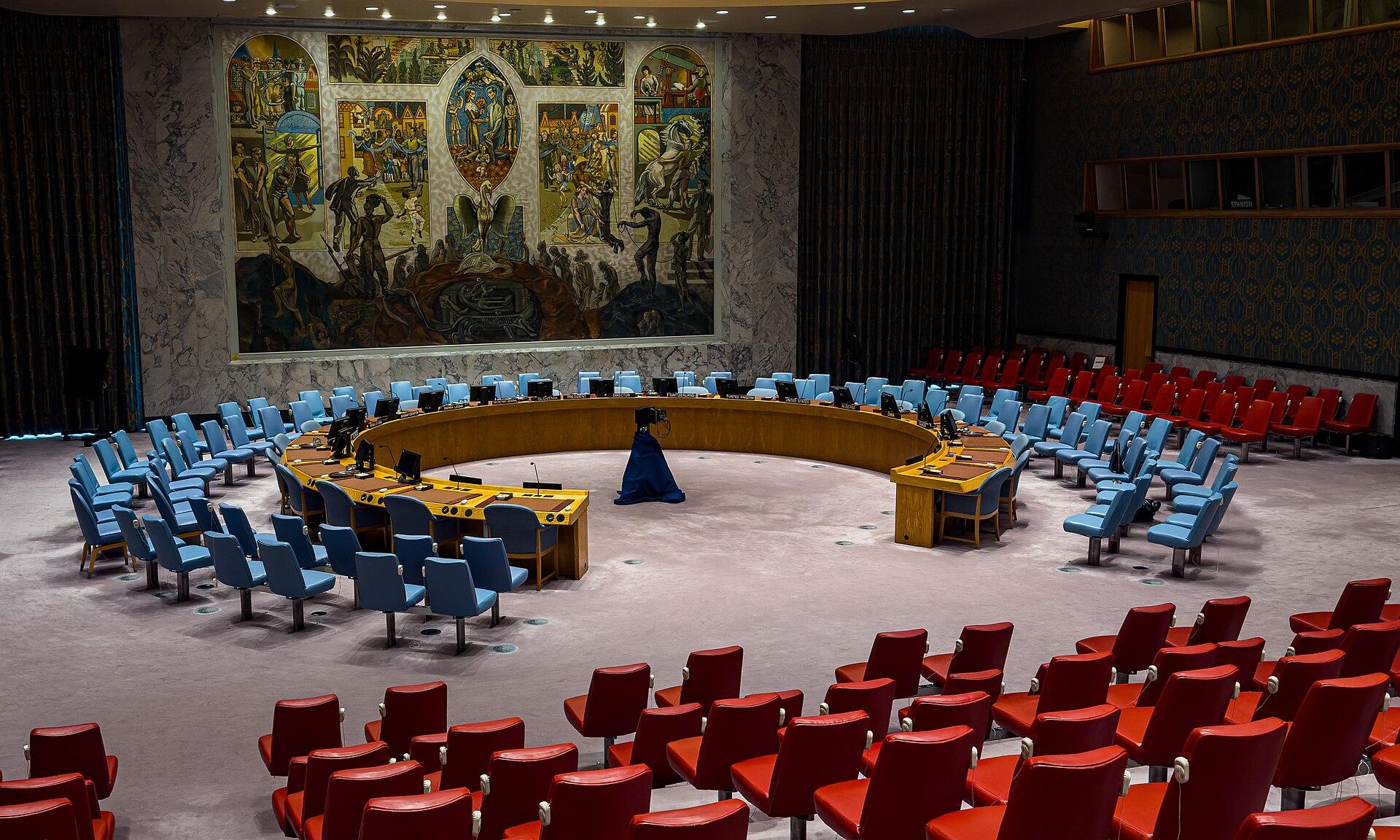
Security Council Report said the Council held closed consultations on the Horn of Africa on 13 October, requested by the United States, with Assistant Secretary-General for Africa Martin Kimani briefing members — the second such session in two weeks after France convened one on 30 September. Neither meeting has produced a press statement, resolution or public readout, according to Security Council Report and Rio Times reporting on the 13 October session, even though Eritrea's foreign minister had written the Council three days earlier asking it to invoke Chapter VII and "forcefully condemn" Ethiopia, a letter FIKIR Institute covered on 11 October. The silence held as Ethiopian government forces advanced the same day to Zalambessa, the border town with Eritrea, according to Reuters reporting carried by The Star, SABC News and Internazionale.
FIKIR Institute · 15 October 2026 · 8 min read
Audio reading is ready.
Abstract: The UN Security Council held closed consultations on the Horn of Africa on 13 October 2026, requested by the United States, with Assistant Secretary-General for Africa Martin Kimani briefing members on the Ethiopia-Eritrea standoff, according to Security Council Report's "What's In Blue" preview of the session and its October 2026 Monthly Forecast. It was the second closed session on the same crisis in two weeks: France convened an earlier round on 30 September, also briefed by Kimani, in the first days after the Tigray war's late-September reignition drew Eritrea into direct confrontation with Ethiopia. Neither session has produced a press statement, presidential statement or resolution. Rio Times Online reported on 14 October that the results of the 13 October talks had not been made public, and Kulu Media's own preview of the session had already suggested members were unlikely to agree on a common response. That institutional silence is the Security Council's full public record, so far, on a letter Eritrea's foreign minister, Osman Saleh, sent it on 10 October explicitly invoking Chapter VII of the UN Charter and asking the Council to "forcefully condemn Ethiopia's deplorable declaration of war against Eritrea" and adopt "deterrent measures," a letter FIKIR Institute covered when it was filed. Ethiopia's own letter, sent two days earlier and invoking Article 51's right of self-defense over a reported Eritrean incursion up to 60 kilometres into Tigray, has fared no better: it too sits before the Council without a recorded response. The 13 October closed session coincided, on the same day, with Ethiopian government forces advancing to Zalambessa, the Ethiopian town sitting directly on the Eritrean border, an episode Reuters reported, citing six sources, as stoking fears the conflict could widen into open interstate war — the exact scenario Eritrea's letter had asked the Council to help deter.
Two closed sessions, zero public products
Security Council Report's "What's In Blue" is the closest thing to a public record of a closed UN Security Council consultation, previewing what members are expected to discuss before the session itself takes place behind doors that exclude press and the public. Its preview of the 13 October session on the Horn of Africa describes a meeting requested by the United States in light of the escalation in northern Ethiopia, with Kimani, the Secretariat's Assistant Secretary-General for Africa, expected to brief members on developments. The outlet frames it as the second such discussion in as many weeks: members had already held closed consultations on the Horn of Africa on 30 September, at France's request, with Kimani briefing then as well, days after fighting reignited across Tigray, Amhara and Afar. Security Council Report's own characterization of the crisis, that it represents the most serious escalation of violence in the area since the 2020-2022 Tigray war, is not in dispute between the outlets covering it; what is absent from every account reviewed for this analysis is any record of the Council agreeing on language to say so in public. Rio Times Online's 14 October report on Ethiopian troops reaching Zalambessa noted explicitly that the results of the Tuesday closed talks had not been made public, and Kulu Media's preview of the same session had already anticipated that Council members, divided over how to characterize the dispute, were unlikely to produce a unified statement.
The letters the Council has not answered
The Council's silence has a specific, dated counterpart: two formal letters, from the two governments most directly involved, that together put the dispute's competing legal framings on the Council's own docket. Ethiopia's foreign minister, Gedion Timothewos, wrote on 8 October describing Eritrean troops and mechanized units advancing up to 60 kilometres into Ethiopian territory as "a blatant act of aggression" triggering Ethiopia's right of self-defense under Article 51, a letter FIKIR Institute covered the same week. Eritrea's foreign minister, Osman Saleh, answered two days later, on 10 October, with a letter reported by Reuters and carried by Al Jazeera, Al Arabiya English and Capital Ethiopia among others, asking the Council to "forcefully condemn" what he called Ethiopia's "deplorable declaration of war against Eritrea" and explicitly invoking Chapter VII, the UN Charter section governing the Council's response to threats to the peace and acts of aggression, under which it can order measures running from sanctions to the authorization of force. Capital Ethiopia's own headline on the letter, describing it as Eritrea urging the Council "to impose Chapter VII sanctions on Ethiopia," underscores how specific and consequential Asmara's request was. As of the 13 October session, three days after that letter was filed, no outlet reviewed for this analysis has reported the Council scheduling a vote, issuing a statement, or otherwise acting on either government's letter.
Zalambessa: the ground outpacing the diplomacy
The Council's second closed session fell on the same day Ethiopian government forces advanced to Zalambessa, a border town of roughly 15,000 people that Tigrayan rebel forces had controlled earlier in the renewed fighting, according to Reuters reporting, based on six sources, carried by The Star, SABC News, Internazionale and Macau Business on 13 and 14 October. Witnesses and the conflict monitor ACLED had reported Eritrean troops crossing into Zalambessa the previous week in support of the rebels; ACLED separately recorded Eritrean forces withdrawing back across the border through the same town on 12 October, though it remained unclear, as of Reuters' reporting, whether any Eritrean personnel or allied fighters were still present when Ethiopian government troops arrived the next day. Neither Ethiopia's military nor Prime Minister Abiy Ahmed's office had commented when Reuters published its account. The Kulu Media and Rio Times accounts of the same episode both describe it as stoking fears of a wider war, with Rio Times citing a prediction-market contract on Polymarket pricing a 22 percent chance, as of 14 October, that Eritrea invades Ethiopia outright before the end of the year. A border town changing hands on the same day the Security Council met privately to discuss exactly this risk, without the Council saying anything publicly about either event, is the clearest available measure of how far the diplomatic track has fallen behind the military one.
Guterres acted; the Council's member states have not
The distinction between the Secretary-General and the Security Council matters here. António Guterres, through spokesman Stéphane Dujarric, issued his own statement on 9 October saying he was "gravely concerned" by the renewed fighting in Tigray, Afar and Amhara, and "further concerned by reports of the presence of Eritrean forces in Ethiopia," according to reporting carried by AllAfrica and Capital Ethiopia. He called on all parties to stop fighting, urged the signatories of the 2022 Pretoria Agreement that ended the prior Tigray war to resume dialogue under its framework, cited the UN Charter's prohibitions on the use of force against territorial integrity, and said he stood ready to offer his good offices. That statement, issued through the Secretariat rather than negotiated among the Council's fifteen member states, is the most substantive public UN response to the crisis to date, and it arrived before either government's letter to the Council or either closed consultation. The Council itself, the body whose members actually hold the authority Eritrea's letter asked it to exercise, has not matched even that limited step with a public statement of its own through two separate sessions.
What to watch
Three signals will indicate whether the Council's pattern of closed sessions without public products continues or breaks. First, whether a third session, likely under whichever delegation next judges the ground situation serious enough to request one, finally produces a presidential statement or press statement, the minimum public product closed consultations can generate when members reach consensus; two consecutive sessions without one suggests that consensus, not procedure, is the obstacle. Second, whether any individual Council member, rather than the Council as a body, breaks from the group's collective silence to comment publicly on Eritrea's Chapter VII request or Ethiopia's Article 51 claim, which would signal where the underlying disagreement actually lies. Third, whether events on the ground, a further Ethiopian advance toward or across the Eritrean border, a confirmed Eritrean re-entry into Ethiopian territory, or a verified strike on either side's forces, force the Council's hand in a way three closed sessions of briefings have not.
Policy implications
For Eritrea, a Chapter VII request that has produced two Council sessions and no public statement in return is a costly diplomatic bet: Asmara raised its own rhetorical stakes by invoking the Charter's most consequential enforcement provision, and a Council that cannot even agree on language condemning Ethiopia leaves that bet looking, for now, unpaid. For Ethiopia, the Council's silence is a form of unearned relief: Addis Ababa faces no public Council rebuke despite Eritrea's request, even as its own forces' advance to Zalambessa, on the day of the Council's second session, supplies exactly the kind of ground escalation that could eventually force the Council's hand against it instead. For the Security Council itself, two closed sessions in two weeks on a conflict its own Secretariat briefer and outside monitors describe as the worst escalation in the Horn since 2020-2022, producing no public record either time, tests whether the body can still function as a venue for de-escalating an interstate war before one, rather than merely monitoring it after the fact. For the wider Horn of Africa, a UN Security Council that has met twice without speaking once is itself a signal to every government in the region, Somalia's among them, about how much practical weight an appeal to multilateral institutions currently carries against the Horn's hardening, bilateral logic of troop movements and border towns changing hands.
Related Analysis
- A Think Tank Warned Ethiopia and Eritrea Are 'Perilously Close' to All-Out War. Its Own Analysis Says That War Would Pull In Sudan, Egypt, Saudi Arabia and the UAE.
- Ethiopia's Federal Government Just Appointed Five Men to Run Tigray by Decree. The Peace Deal That Ended the Last War Said Tigrayans Were Supposed to Help Choose Them.
- Somalia's Defence Minister Says His Forces Removed 260 Armed Men From Opposition Leaders' Homes. The Armoured Vehicles Ringing Those Homes Were Still There Three Days Later.
- Somalia's Government Says It Is 'Neutral' Between Ethiopia and Eritrea. Eight Days Earlier, Its President Had Signed a Declaration Siding Against Ethiopia on Both Its Biggest Regional Claims.